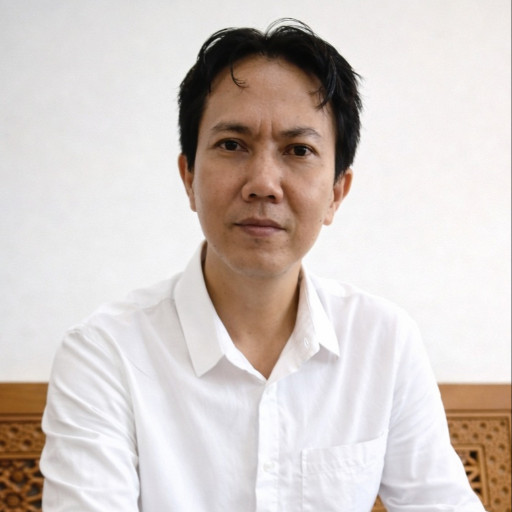
Dr. Zainuddin, M.Pd.I
Lecturer
Universitas Al-Qur'an Ittifaqiah Indralaya, Indonesia · ID
 0009-0001-9969-8124
1
Paper
95
Views
142
Downloads
About
Dr. Zainuddin, M.Pd.I is a Lecturer in the Department of Islamic Religious Education at Universitas Al-Qur'an Ittifaqiah Indralaya, Indonesia. His research focuses on Islamic education, curriculum development, Islamic pedagogy, digital learning, multicultural education, and the history of Islamic civilization. He actively publishes in national and international peer-reviewed journals and serves as Editor-in-Chief of La Riba: Jurnal Perbankan Syariah and Al-Iqtishad: Jurnal Ekonomi Syariah. He has extensive experience as a reviewer for numerous national and international journals. His academic interests include integrating Islamic values into contemporary education, educational innovation, and the advancement of Islamic educational research through interdisciplinary and evidence-based approaches.
Research Interests
Expertise
Publishes In
Published Papers
https://doi.org/10.64823/ijepp.2601002
The COVID-19 pandemic has intensified a longstanding debate in Indonesian education policy: whether it is more important to widen access to schooling or to improve the quality of learning. This article examines the relationship between two major policy instruments in Indonesian education—free schooling and nutritional support, specifically the Free Nutritious Meals Program (Makan Bergizi Gratis, MBG). Using a systematic literature review combined with interpretive policy analysis, the study draws on evidence from Scopus- and Web of Science-indexed international journals, reports from major global institutions, and Sinta 1- and Sinta 2-accredited national journals. The findings are notable: free schooling has successfully increased enrollment, particularly among children from low-income families, but has not automatically translated into better learning outcomes. School feeding programs, by contrast, show measurable impact—students attend more regularly, concentrate better in class, and achieve higher scores—although the effectiveness of these programs depends heavily on implementation quality. This article rejects the framing that pits access against quality, arguing that the two are not mutually exclusive. Drawing on human capital theory, social protection scholarship, and systems-based policy analysis, the article proposes an integrated policy model that simultaneously expands access, delivers nutritional intervention, and raises education quality. Three elements are emphasized: cross-sectoral coordination, data-driven monitoring, and mutually reinforcing policy design. These findings are relevant not only to Indonesia but also to other developing countries facing similar challenges